The Sanctuary of Human Memory
Critical and Cultural Reflections on the Spaces of the Muse du Louvre
To stand at the thresholds of the Musée du Louvre in the heart of Paris is to do more than merely step into a space dedicated to exhibition; it is to cross a “temporal threshold” that divorces the chaos of the contemporary world from the depths of immemorial human memory. In its historical genesis, the Louvre was a fortified citadel engineered to protect, later evolving into an opulent royal palace inhabited by kings and princes, only to emerge today as the ultimate repository and sanctuary for the spirits of vanished civilizations.
Yet, far beyond the statistical records of visitor volumes and the cacophony of consumerist tourism clustering before glass vitrines, the Louvre harbors a profound critical, cultural, and museological dimension. It operates not merely as a museum, but as a “grand mirror” reflecting the wills of empires, philosophies of aesthetics, and the complex inquiries of human identity and cultural representation across epochs.
I. Structure and Architecture:
The Confluence of Royal Heritage and Modern Transparency
The experiential journey through the Louvre commences with its architecture, which narrates a historical dialectic of conflict and harmony across successive eras:
- Interlayered Historical Strata: The physical complex stands as a material witness to the transformations of French architecture, spanning the Middle Ages, the Renaissance, and the modern era. The robust foundations remaining from the fortress of Philip Augustus serve as a grim reminder of the site’s initial defensive function, while the monumental salons—adorned with gold leaf and ceiling frescoes—articulate the philosophy of absolute royal opulence.
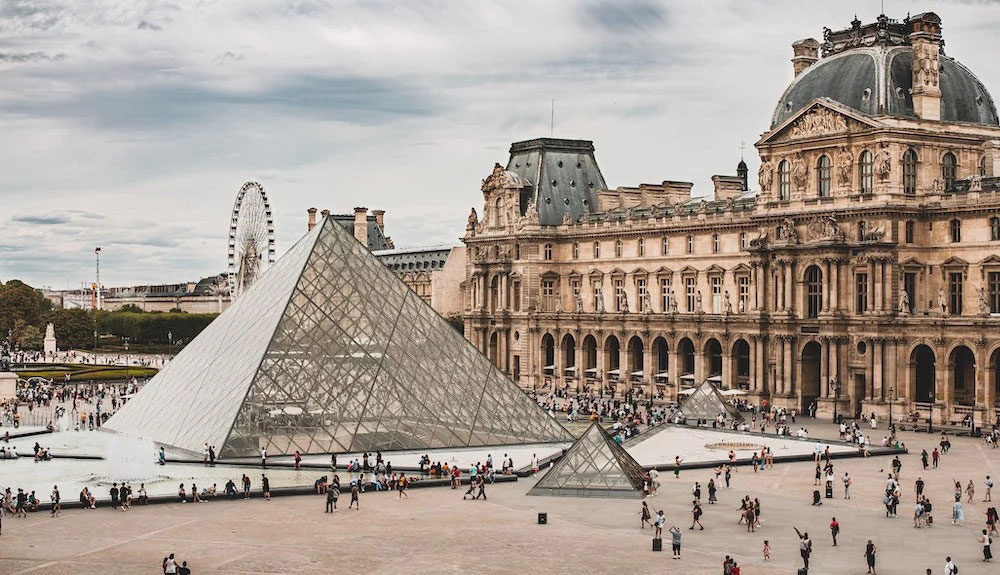
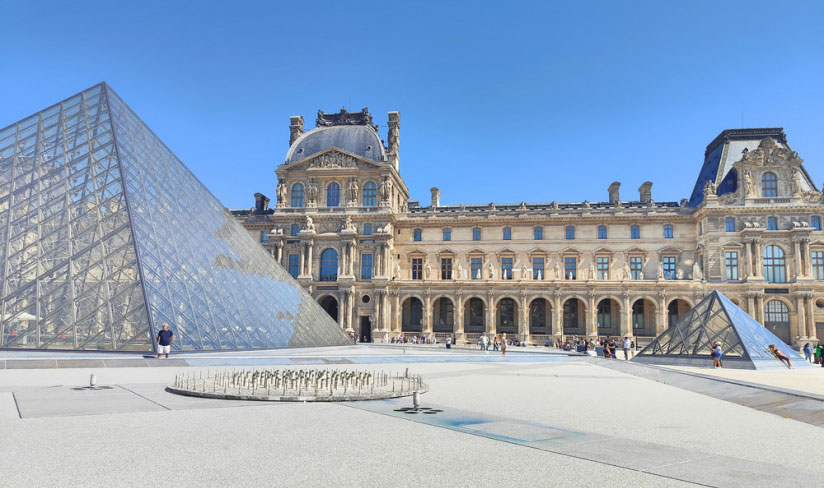
- The Paradigm of Modernity and the Glass Pyramid: When the iconic glass pyramid, designed by architect I.M. Pei, was introduced to the Cour Napoléon, it ignited a fierce wave of critical and artistic controversy. Proponents hailed it as a transparent, contemporary aperture linking the past to the present, while detractors condemned it as a jarring modernist intrusion upon a venerable historic mass. Over time, however, this pyramid has transmuted into a profound visual metaphor for the philosophy of major cultural institutions: injecting light and clarity into the obscure vaults of history, and rendering human heritage exposed and visible to all under a unified sky.
![]()
II. The Topography of Treasures:
The Center-Periphery Narrative in Exhibition Spaces
The galleries of the Louvre house over 380,000 artifacts, distributed across vast wings such as Denon, Richelieu, and Sully. From a critical and cultural perspective, the curation and taxonomy of these objects are never innocent or neutral archival arrangements; rather, they reify a specific Western gaze regarding human history:
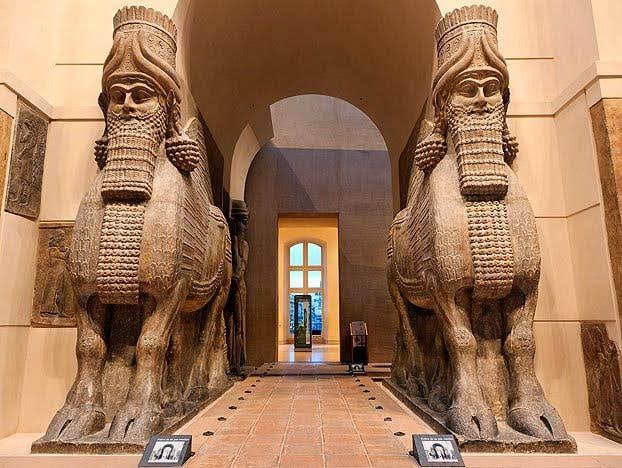
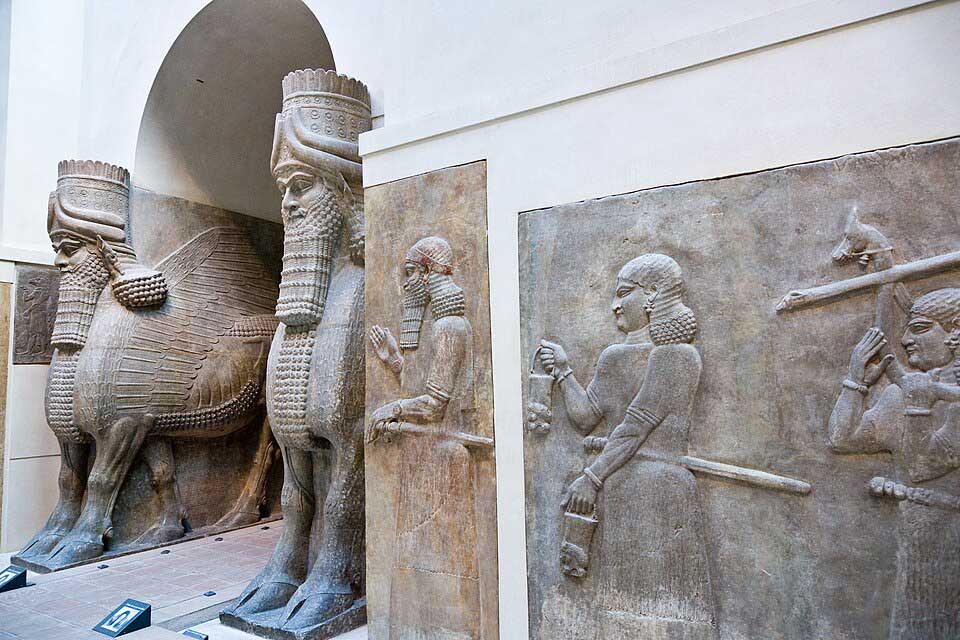
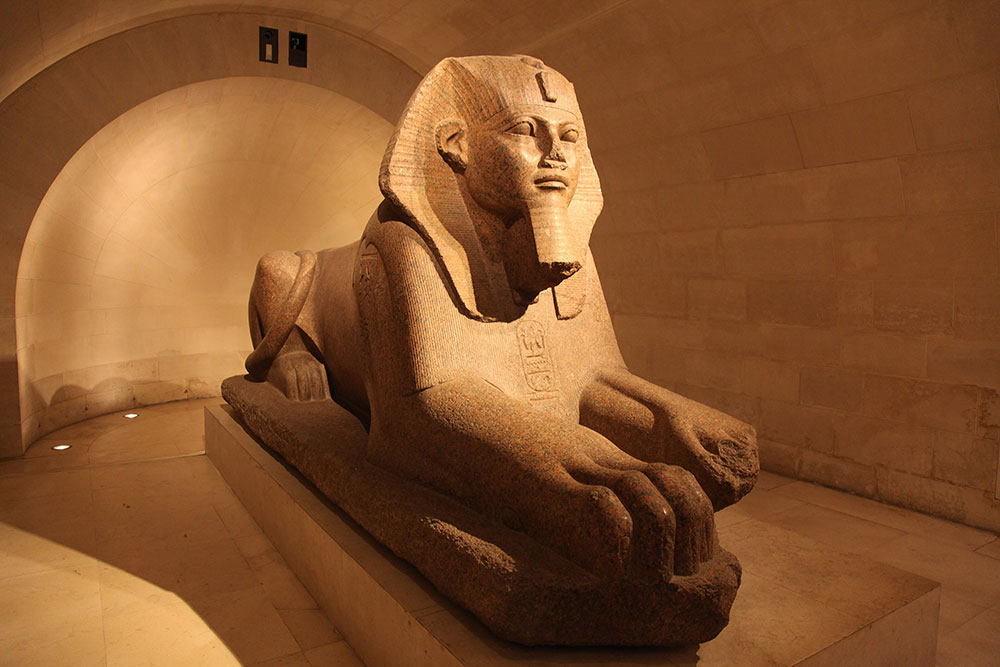
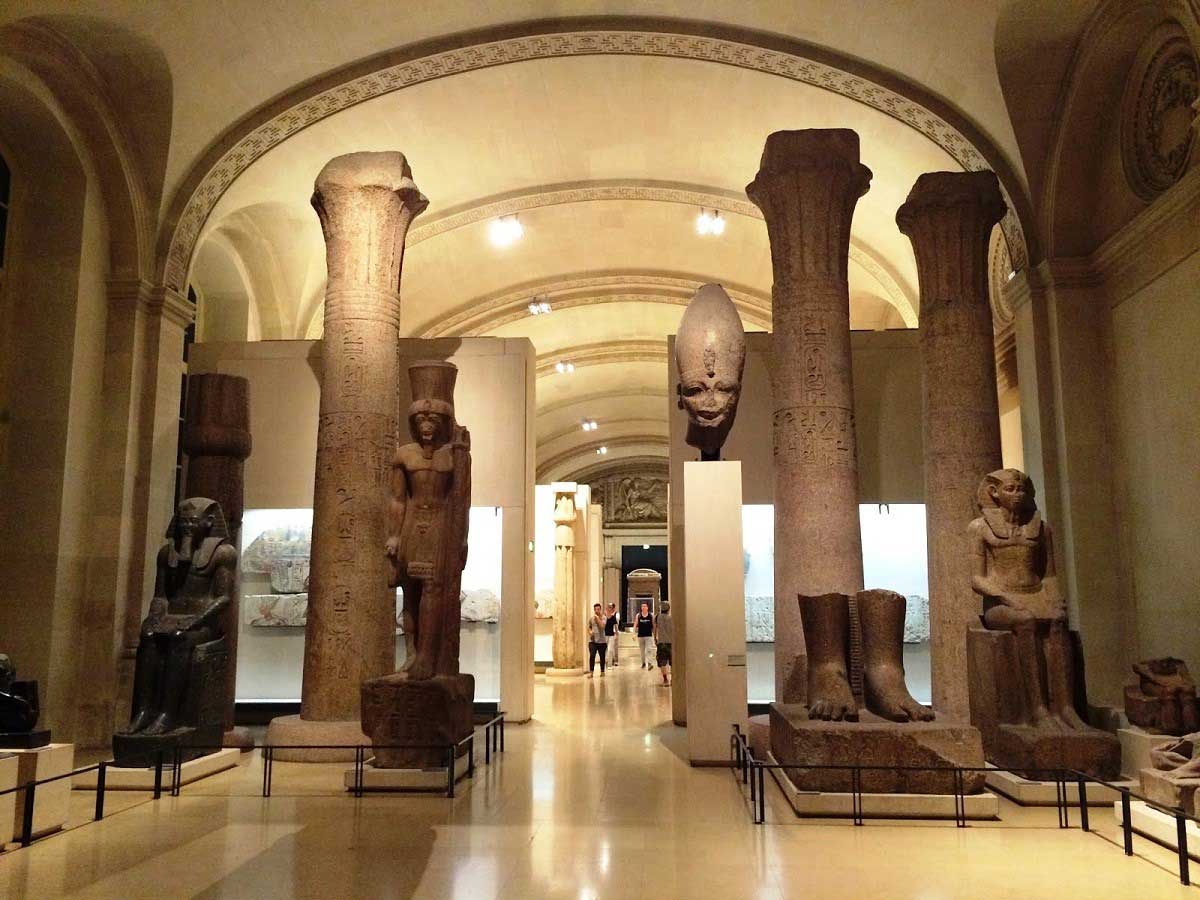
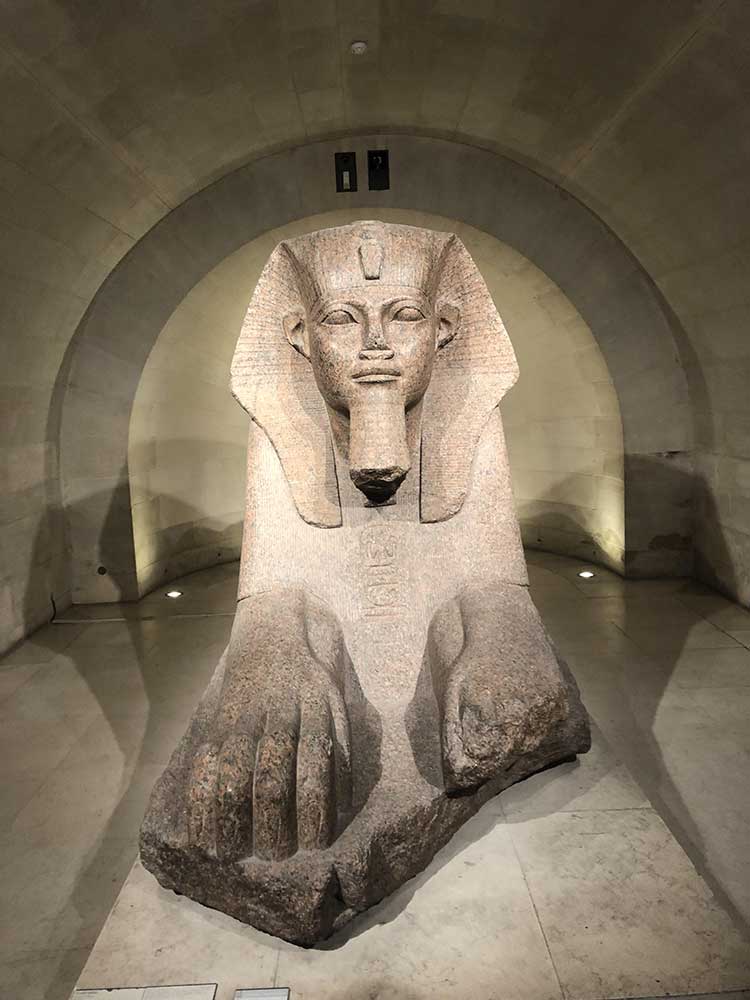
- Eastern Civilizations Through the Western Gaze: In examining the galleries dedicated to Ancient Egyptian, Mesopotamian, Persian, and Islamic antiquities, one observes how these artifacts have been re-contextualized and structurally realigned. They are seamlessly integrated into a grand, centralized narrative that progressively culminates in the zenith of European art and the Renaissance. This transformation of living religious or functional objects from their indigenous societies into silent, museological artifacts reflects what cultural critics describe as “uprooting and containment.” The artifact is severed from its organic habitat to serve as a monument to the Western intellect’s capacity to aggregate and codify the world under a single roof.
![]()
Archival views from the Ancient Egyptian and Mesopotamian wings of the Musée du Louvre. This curatorial taxonomy manifests the critical framework of “uprooting and containment,” wherein living, sacred artifacts are detached from their indigenous habitats to serve as silent monuments within a centralized Western historical narrative.
- Canonical Icons and the Myth of Presence: Masterpieces such as Leonardo da Vinci’s Mona Lisa, the Venus de Milo, and the Winged Victory of Samothrace occupy the absolute apex of visual symbolism within the institution. These pieces undergo a process of “contemporary sacralization” that decouples them from their actual material history. The visitor no longer stands before a canvas or a sculpture to objectively contemplate its plastic techniques; instead, they participate in a collective, consumerist ritual to document the moment of “encountering the myth.” This symbolic congestion frequently de-classes the artwork, transforming it into a mere cultural brand or icon stripped of its original, contemplative depth.
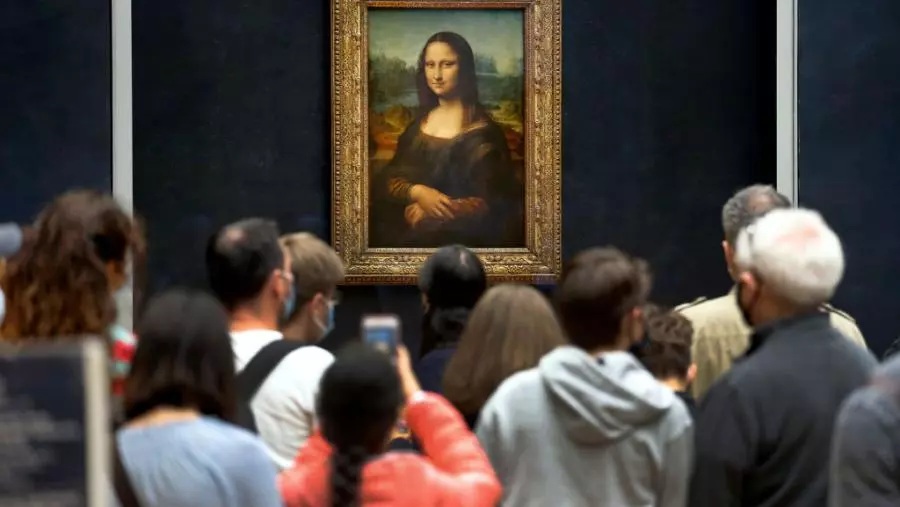
A documentary capture of tourist crowds before Leonardo da Vinci’s Mona Lisa in the Salle des États. This symbolic congestion illustrates the critical diagnosis pioneered by Walter Benjamin, where autonomous aesthetic contemplation is supplanted by a mechanized consumerist ritual to validate the “encounter with the myth,” effectively stripping the canonical icon of its ontological depth.
III. A Critique of Consumer Culture:
The Commodification of Heritage
The greatest challenge confronting monumental museums like the Louvre transcends the physical conservation of the artifact, reaching into a deeper cultural crisis: the commodification of heritage.
- The Erosion of the Aura: In his seminal aesthetic analyses, philosopher and critic Walter Benjamin posited that the authentic artwork possesses an “aura” derived from its singular existence in a specific time and space. However, the mass consumption of the Louvre, compounded by the endless reproduction of its icons on prints and commercial souvenirs, has led to the systematic erosion of this aura. The artifact becomes visually over-determined before the visitor even beholds it in reality, thereby draining the contemplative experience of its spontaneous, aesthetic shock.
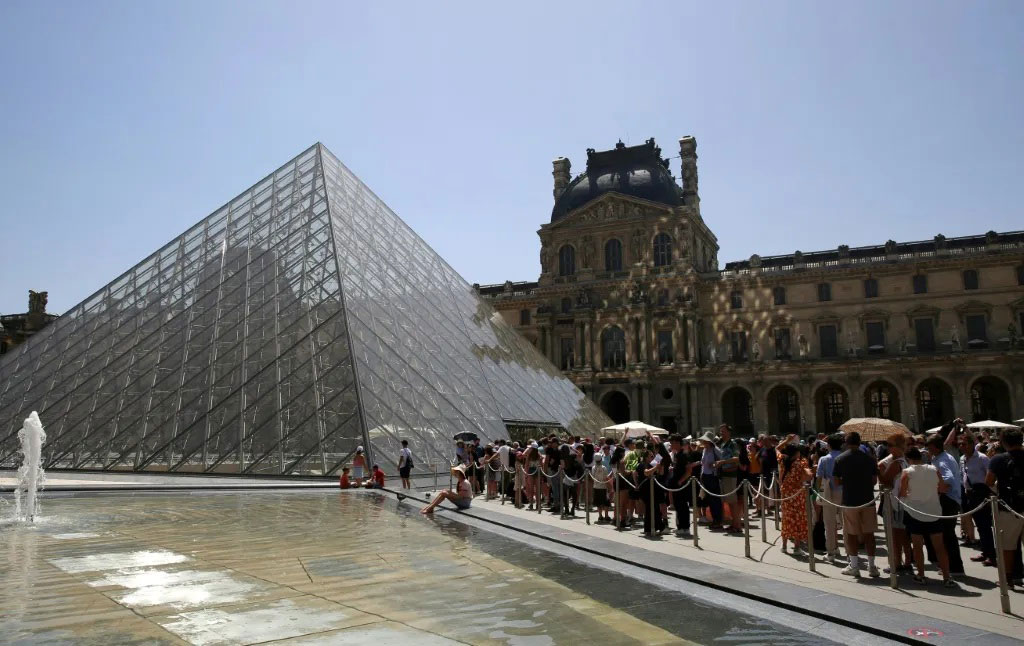
- The Alienated Temporal Experience: Within an institution of the Louvre’s scale, the visitor is frequently reduced to a “time-bound consumer,” navigating a digital map or a printed checklist to clear a series of institutional mandates (“must-see” landmarks). This accelerated rhythm stands in stark opposition to the true spirit of heritage, which demands deceleration, silence, and an acute listening to the stillness of stones and canvases. The museum, in this sense, risks falling into the trap of converting visual contemplation into a metrics-driven task of consumerist achievement.
![]()
The Louvre as a Fractured Mirror of Human Identity
Despite these structural contradictions, the Musée du Louvre endures as a magnificent, indispensable crossroad for comprehending the artistic history of humanity. It is not merely a static storehouse of past glories, but a living space where our perspectives on history, beauty, and the methods by which we engage our shared heritage actively collide.
To visit the Louvre with a rigorous, critical eye requires navigating past the superficiality of crowds and pre-packaged iconography—delving instead into the fundamental inquiries whispered by every corner of this eternal palace: Who are we? From whence did we come? And how can beauty remain resilient against the encroachment of decay and the relentless noise of modernity?
![]()
![]()