The Proletarian Opera and the Symphony of Color
The Bio-Historiography of Hamed Ewais, Pioneer of Social Realism in Fine Arts
In the historiography of Arab plastic arts, few artists have succeeded in transcending purely aesthetic frameworks to transform their brushes into an extension of the collective consciousness and a reflection of the working-class struggle. The seminal artist Mohamed Hamed Ewais (1919–2011) reigns supreme among these pioneers as one of the most prominent visual philosophers who chronicled the epic of the subaltern Egyptian. His canvases were never merely color-blocked planes destined for gallery and museum walls; rather, they constituted “living visual archives” encapsulating the history of a nation grappling for dignity, social justice, and the utopian promise of a better tomorrow.
Genesis and Upbringing: From Rural Soil to Urban Shock
Hamed Ewais was born on March 8, 1919, in the village of Kafr Mansour within the Beni Suef Governorate of Upper Egypt, to a modest agrarian family. Within that idyllic haven, his early artistic sensibilities were forged in tandem with nature; he internalized the shifting palette of the fields across seasons and nourished his gaze upon the clarity of the vast horizon and the warmth of the earth.
However, his life trajectory underwent a radical paradigm shift when he relocated to Cairo to pursue artistic studies, defying his family’s wish for him to enroll in the Police Academy. This migration from rural tranquility to the cacophony of the metropolis induced a profound emotional shock in the young student. He was confronted with stark social disparities, a highly stratified society, and the complete erasure of the expansive natural landscapes he had natively known.
In his quest for a sanctuary to restore his spiritual equilibrium, Ewais integrated into avant-garde intellectual and cultural circles at the School of Fine Arts in Zamalek. This marked the inception of his voracious consumption of socialist literature and theories of social justice. It was here that Ewais made his definitive, fateful decision: art would not function as a bourgeois luxury or a decorative apparatus; rather, it would serve as a conscious weapon and a noble humanistic manifesto championing the rights of the proletariat. He graduated from the School of Fine Arts in 1944 and pursued further studies at the Higher Institute for Art Education under the mentorship of the pioneering educator Youssef Afifi, embarking upon a phenomenal creative odyssey.
![]()
Ideological Foundations: The Manifesto of the Modern Art Group
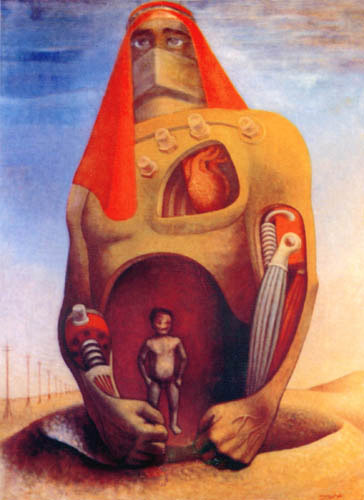
In 1947, Ewais, alongside a cohort of the most illustrious artists of his generation—such as Gamal El-Segini, Gazbia Sirry, Zeinab Abdel Hamid, and Salah Yousri—founded the “Modern Art Group”. This group represented an early revolutionary manifesto against a Surrealism they deemed detached from societal imperatives, and against art sequestered in ivory towers.
The group’s proponents posited that an artist must be an organic intellectual rooted in their environment, authentically mirroring the grievances and aspirations of the masses. Ewais was profoundly influenced by senior academic instructors and the ideational frameworks of Mexican muralists—most notably Diego Rivera and David Alfaro Siqueiros—in tandem with his admiration for European modernists such as Pablo Picasso and Henri Matisse. He synthesized these variegated influences to forge a unique plastic lexicon characterized by formal clarity, stylistic audacity, and profound socio-political messaging.
![]()
Stylistic Imprints: Anatomical Monumentalism and Visual Epicism
Ewais’s plastic style is distinguished by its singular capacity to reconcile ideological rigor with a deceptive simplicity of execution—a quality akin to the “attainable unattainable” (al-sahl al-muntani’). The salient stylistic attributes defining his oeuvre include:
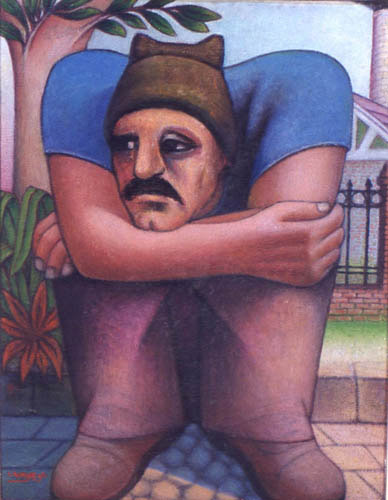
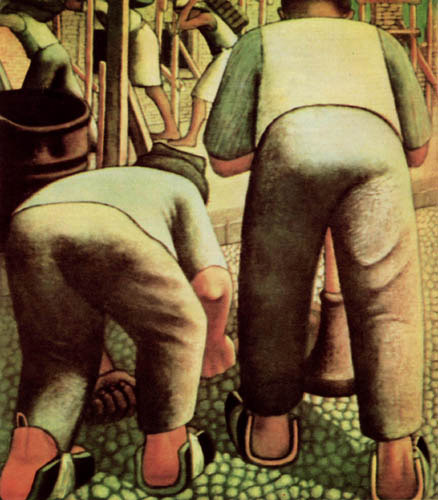
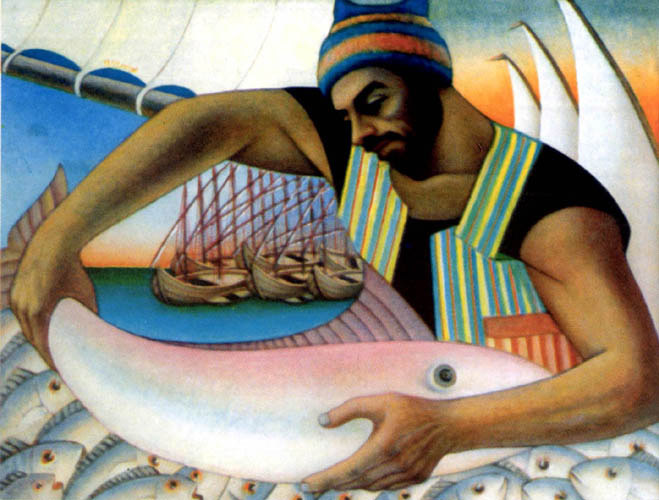
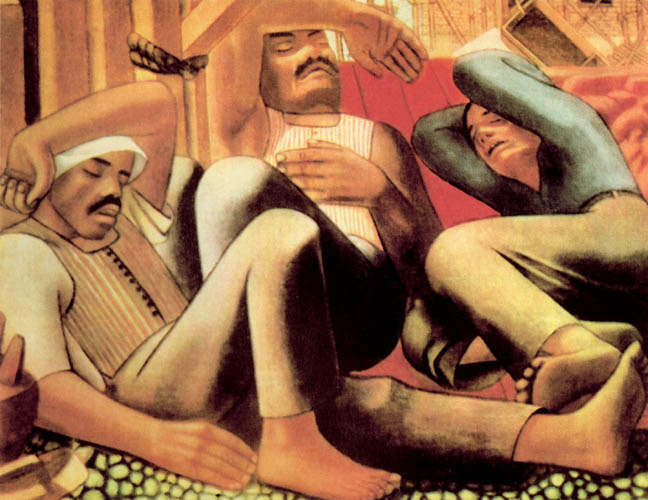
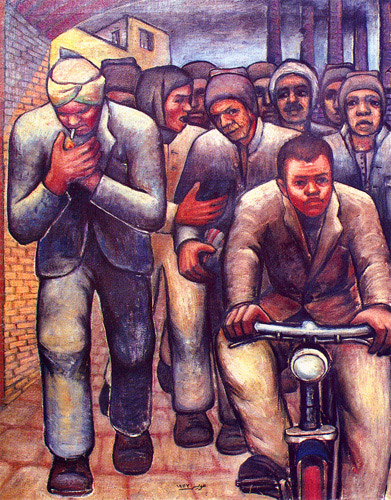
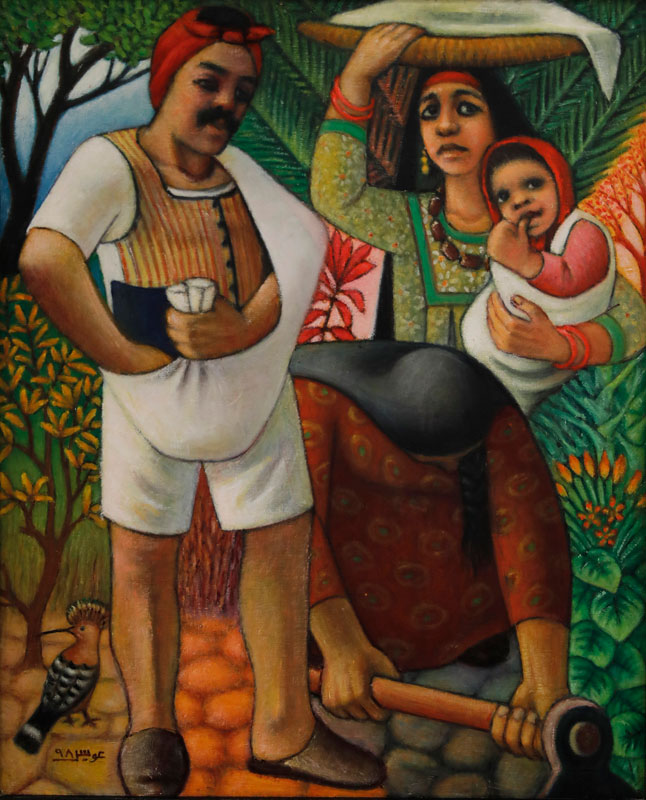
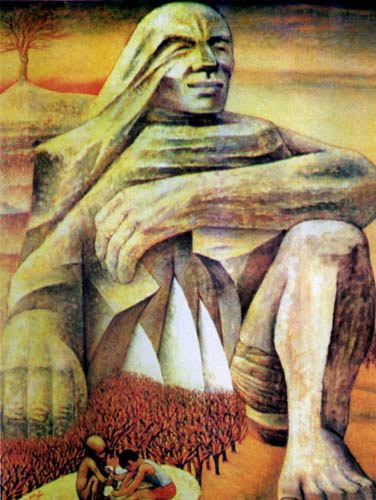
- The Magnification of Mass and Corporeality: Ewais depicted laborers, peasants, fishermen, barbers, and street vendors by monumentalizing their physiques, rendering their anatomy with robust, sculptural masses and sinewy musculature. This formal exaggeration was not a capricious distortion; rather, it functioned as a visual metaphor for the resilience of the Egyptian populace and their monumental capacity to endure and confront adverse socio-economic conditions.
- The Dialectic of the Part and the Whole: Ewais adhered to meticulous compositional theories dictating that for the artistic “whole” to achieve structural resolution, every discrete painterly space or micro-detail within the canvas must operate as a self-contained architectural entity.
- Sui Generis Brushwork Technique: He was renowned for deploying relatively small, coarse bristle brushes (such as a modified No. 2 or No. 4 brush) to deeply embed pigment into the interstices of the canvas matrix. Through this technique, medium and substrate coalesced into an indivisible, organic unity, fused by the artist’s creative impulse.
- The Window of Absolute Hope: In many of his domestic interior compositions, Ewais systematically introduced a small window opening onto light and the far horizon. This served as an iconographic trope for optimism—a glimmer of light articulating his unyielding faith in the eventual emancipation of the working class.
![]()
Masterpieces of Plastic Art in Global Museums
Throughout a prolific career spanning several decades, Ewais produced canonized masterpieces that stand today as monuments of modern Arab art historiography, most notably:
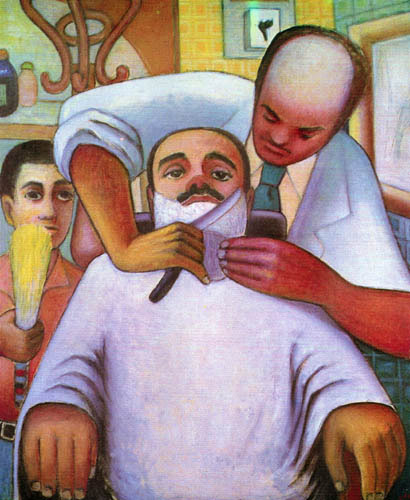
- The Barber (1955): An intimate vignette capturing the vernacular daily life of traditional Egyptian alleyways.
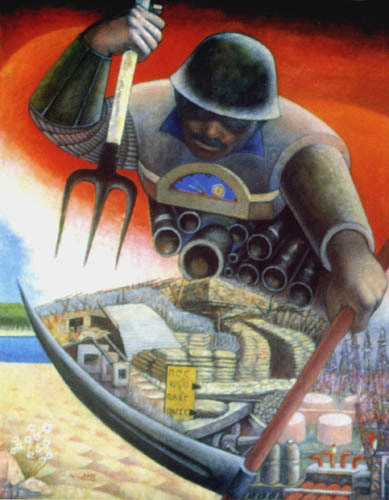
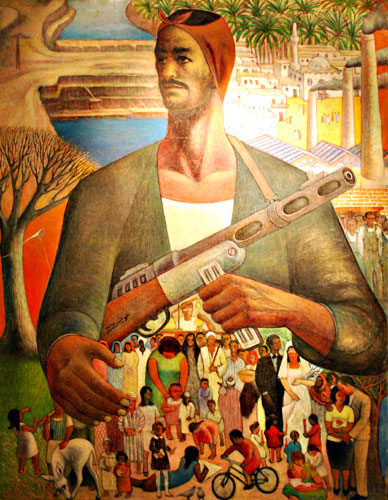
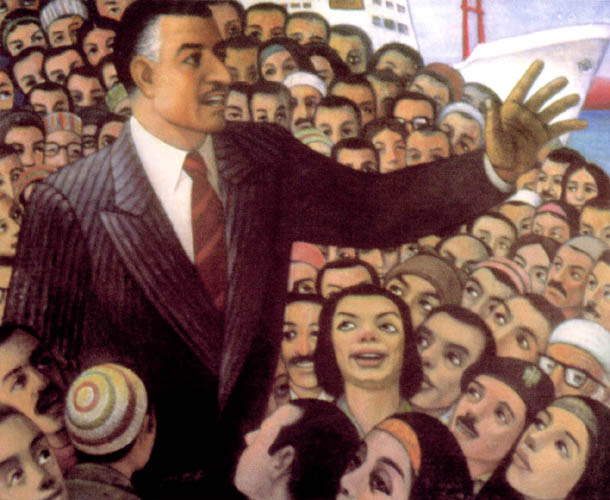
- The Leader and the Nationalization of the Canal (1957): A grand national epic documenting the historical moment of liberation and national sovereignty.
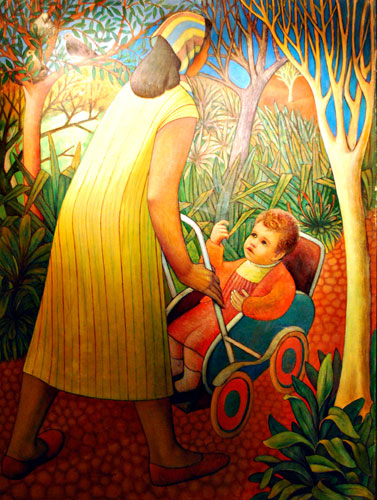
- Love and Peace (1960): A serene visual hymn expressing humanity’s universal yearning for stability and concord.
- The Monumental Aswan High Dam Cycle: Works wherein Ewais cast laborers as modern titans, their physical toil narrating the mythos of constructing modern Egypt.
The resonance of these works reverberated far beyond domestic borders, prompting leading international and regional museums to acquire and exhibit them. His works reside in the permanent collections of the Museum of Modern Egyptian Art in Cairo, the Museum of Fine Arts in Alexandria, Mathaf: Arab Museum of Modern Art in Doha, the Barjeel Art Foundation in Sharjah, the State Hermitage Museum and the Pushkin State Museum of Fine Arts in Russia, the Staatliche Kunstsammlungen Dresden in Germany, and the Museum of Contemporary Art in Spain.
![]()
Laurels, Academic Stewardship, and Demise: An Indelible Legacy
Hamed Ewais assumed numerous prestigious academic appointments. He served as an instructor of drawing, subsequently becoming a professor at the Faculty of Fine Arts at Alexandria University—an institution he helped co-found. He served as Dean of the faculty between 1977 and 1979, and was elected as the inaugural head of the Syndicate of Plastic Artists in Alexandria. His career culminated in receiving numerous distinguished accolades, foremost among which was the State Merit Award in Fine Arts in the year 2000.
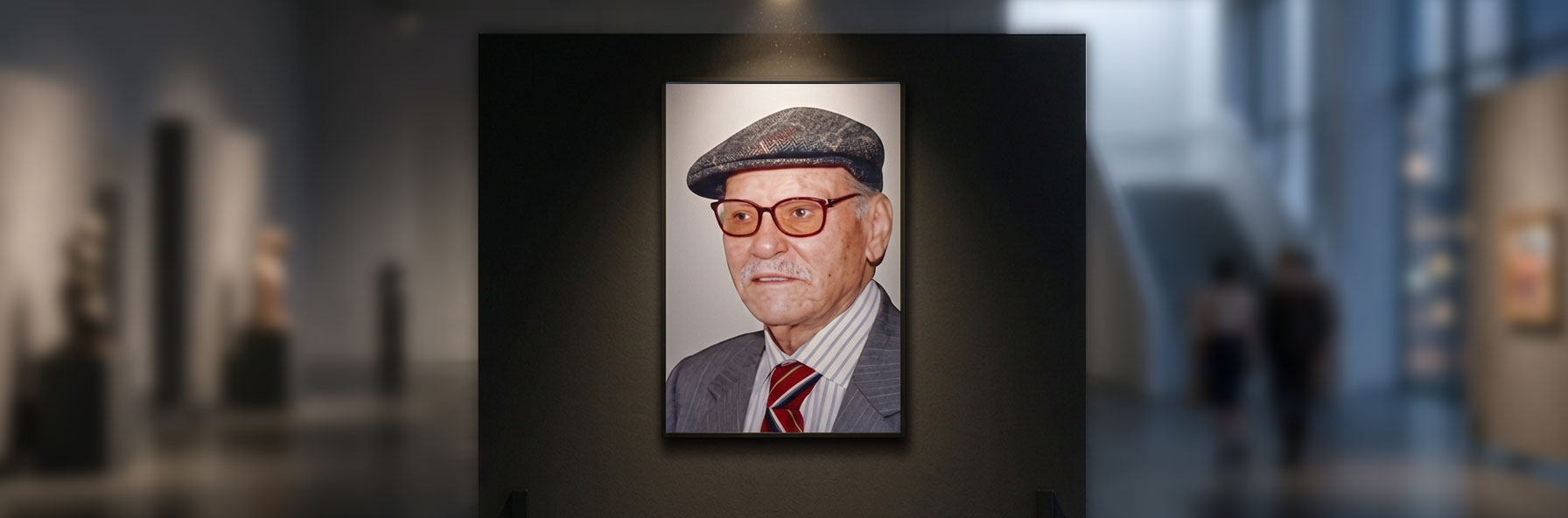
On December 30, 2011, the titan of Arab plastic art passed away in Cairo at the age of 92, leaving behind a rare creative legacy that remains a beacon illuminating the paths of nationalistic and humanistic dedication.
The Perennity of Influence
Reviewing the bio-bibliographical legacy of Hamed Ewais within cultural heritage portals and curatorial collections is not a mere nostalgic invocation of a transient historical figure; rather, it is an evocative resurrection of a nation’s conscience, meticulously documented by a masterly brush. Ewais demonstrated that authentic art possesses ontological perennity so long as it aligns itself with truth, goodness, and beauty, and that the rhythmic pulse of the proletariat remains the most resonant cadence museums can immortalize across the epochs.
![]()