
|


The Proletarian Opera and the Symphony of Color
In the historiography of Arab plastic arts, few artists have succeeded in transcending purely aesthetic frameworks to transform their brushes into an extension of the collective consciousness and a reflection of the working-class struggle. The seminal artist Mohamed Hamed Ewais (1919–2011) reigns supreme among these pioneers as one of the most prominent visual philosophers who chronicled the epic of the subaltern Egyptian. His canvases were never merely color-blocked planes destined for gallery and museum walls; rather, they constituted “living visual archives” encapsulating the history of a nation grappling for dignity, social justice, and the utopian promise of a better tomorrow.

The Magic of Eternal Vessels
Historically, artistic vases and vessels have transcended their utilitarian functions as mere static receptacles for botanical arrangement. They endure as material mirrors of entire epochs—theological and aesthetic stages where the mastery of artisans, the patronage of monarchs, and the visual philosophies of artists converge to capture absolute beauty. The connoisseurship of collecting antique and contemporary fine vases extends far beyond the boundaries of transient interior decor; it operates as a rigorous, investment-driven pilgrimage through the history of material culture, seeking that precise sculptural equilibrium that endows architectural space with a living, breathing soul.
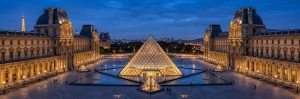
The Sanctuary of Human Memory
To stand at the thresholds of the Musée du Louvre in the heart of Paris is to do more than merely step into a space dedicated to exhibition; it is to cross a “temporal threshold” that divorces the chaos of the contemporary world from the depths of immemorial human memory. In its historical genesis, the Louvre was a fortified citadel engineered to protect, later evolving into an opulent royal palace inhabited by kings and princes, only to emerge today as the ultimate repository and sanctuary for the spirits of vanished civilizations.
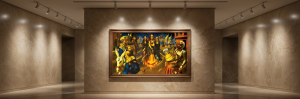
The Myth of Light and Color
Within the annals of Arab visual arts, few figures have harmonized the judicial austerity of the bench with the ethereal poetry of the brush as consummately as the Egyptian master Mahmoud Saïd (1897–1964). Far from a mere painter of transient scenes, Saïd operated as a “visual philosopher.” He single-handedly reconfigured the modern Egyptian consciousness, seamlessly blending his innate aristocratic heritage with the kinetic pulse of the populace—transmuting mundane, vernacular realities into timeless, canonical masterpieces that remain fiercely contested by elite museums and international auction houses alike.

The Magic of the Orient in the Mirror of the Occident
Historically, the relationship between Europe and the Arab-Islamic East transcended mere political intersections or commercial exchanges. During the eighteenth and nineteenth centuries, it culminated in an unbridled fascination and a singular visual inspiration. European artists and artisans discovered in the Eastern world an oasis of enchanting exoticism, vibrant palettes, and geometric ornamentations that defied Western conventions.